TUCSON, Ariz. — As the desperate, high-stakes search for 84-year-old Nancy Guthrie pushes deeper into its third week, federal and local investigators have achieved a significant analytical breakthrough. By painstakingly reconstructing the digital and physical evidence left behind at her Catalina Foothills residence, authorities have narrowed the timeline of her disappearance to a terrifyingly precise window. This development has shifted the entire geographical focus of the manhunt across southern Arizona, bringing new urgency to a case that has gripped the nation.
According to the latest intelligence released by the joint task force, comprehensive analysis of the known timeline suggests that Nancy Guthrie was most likely removed from her home between approximately 2:30 a.m. and 3:00 a.m. local Tucson time on Sunday, February 1, 2026.
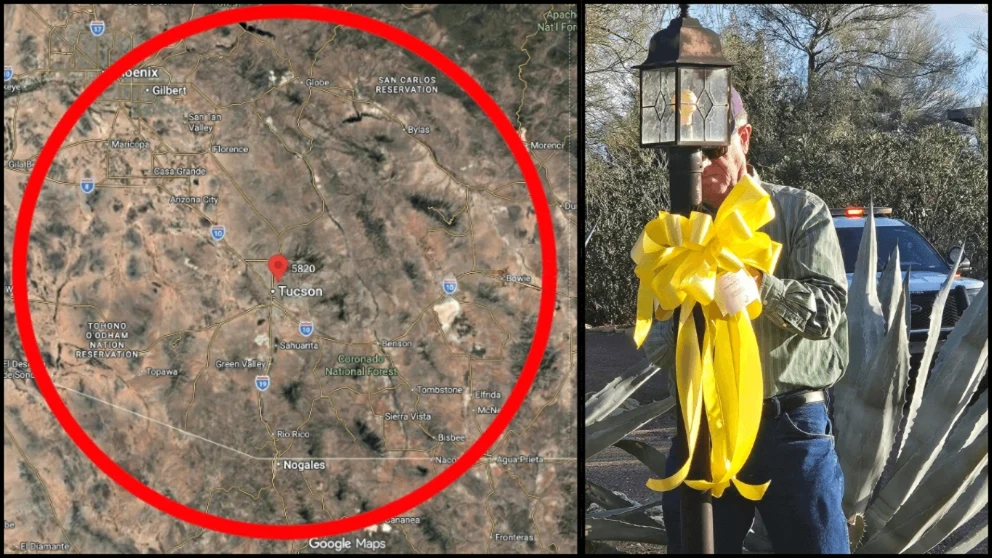
This devastatingly tight timeframe has provided law enforcement with a critical new metric: the two-hour driving radius. Based on that estimated window, investigators and independent analysts believe that if Guthrie was transported away from her home, the suspect would have had a sufficient but highly compressed period to conceal her or dispose of her remains before first light. Astronomical data confirms that morning twilight on February 1 began at exactly 5:40 a.m., providing a limited but significant period of absolute darkness during which a suspect could have traveled and operated undetected.
This geographical radius encompasses thousands of square miles of remote desert terrain, winding rural roadways, rugged mountainous regions, and vast, sparsely populated expanses of public and private land across the American Southwest. The sheer scale of this potential search zone underscores the monumental challenge facing the hundreds of agents and detectives currently assigned to the case.
The Night of the Disappearance: Reconstructing the Timeline
To truly understand the significance of the 2:30 a.m. to 3:00 a.m. extraction window, one must look at the meticulously established timeline leading up to the darkest hours of February 1.
Nancy Guthrie, the 84-year-old mother of NBC Today show co-anchor Savannah Guthrie, had spent the evening of Saturday, January 31, enjoying dinner at the nearby home of her eldest daughter, Annie Guthrie. It was a routine, familial evening that gave no indication of the nightmare that was about to unfold. At approximately 9:48 p.m., Nancy was driven back to her home by her son-in-law, Tommaso Cioni. Security systems logged Guthrie’s garage door closing at 9:50 p.m. as Cioni departed the premises. He was the last known person to see the beloved grandmother alive and well.
For nearly four hours, the residence remained quiet. Then, at 1:47 a.m., the digital perimeter of Guthrie’s home was breached. A doorbell camera captured the chilling image of a masked and gloved individual approaching the entryway and actively disconnecting the device.
For days, the missing time between the camera’s disconnection at 1:47 a.m. and the realization that Nancy was missing the following morning remained a massive blind spot for detectives. However, through aggressive forensic analysis, investigators now believe the actual removal of Guthrie from the property occurred roughly 45 to 75 minutes after the camera was disabled—between 2:30 a.m. and 3:00 a.m. This suggests the perpetrator spent a significant amount of time inside or immediately outside the residence before fleeing with the victim.
A Digital Forensic Masterclass by Federal Authorities
The establishment of this timeline was no simple feat. In the immediate aftermath of Guthrie’s disappearance, law enforcement faced a deliberate and sophisticated attempt to blind their investigation.
Authorities have indicated that certain recording devices and physical data storage units may have been entirely removed from the home by the suspect, severely complicating early evidence collection efforts. The perpetrator clearly possessed enough situational awareness to target the surveillance infrastructure of the property, attempting to ensure that no digital footprint of the abduction survived.
However, the Federal Bureau of Investigation (FBI) and the Pima County Sheriff’s Department refused to concede the digital battleground. Over the course of eight grueling days, investigators worked intimately with top-tier, private-sector technology partners and the FBI’s Operational Technology Division. Their objective was to recover digital evidence from the cloud and internal network caches that the suspect believed had been lost, corrupted, or rendered permanently inaccessible.
This monumental technological effort paid off. Federal authorities successfully recovered and released four previously inaccessible images from Nancy Guthrie’s compromised home surveillance system. These high-resolution images depict a masked individual directly connected to the intrusion. The suspect is described as a male, standing approximately 5 feet 9 inches to 5 feet 10 inches tall, with an average build, clad in dark clothing, a ski mask, neoprene gloves, and wearing a black, 25-liter “Ozark Trail Hiker Pack” backpack.
The Two-Hour Radius and the Geographic Challenge
With the extraction time estimated at 2:30 a.m. to 3:00 a.m., and the onset of morning twilight at 5:40 a.m., the perpetrator had roughly two to three hours of darkness to operate under the cover of night. Assuming an average driving speed on mixed terrain—ranging from paved highways to unpredictable rural dirt roads—a two-hour driving radius outward from the Catalina Foothills covers a massive swath of southern Arizona.
This radius stretches deep into the unforgiving Sonoran Desert, touching the edges of the Coronado National Forest, reaching down toward the international border, and extending westward into remote tracts of Pima and Pinal counties. It is an environment characterized by dense saguaro cacti, rocky outcroppings, deep arroyos, and abandoned mining claims—terrain that can easily swallow a vehicle or a person without a trace, and where the elements themselves pose a lethal threat to search and rescue operations.
Law enforcement has not publicly confirmed a specific, pinpointed search zone to the media, maintaining strict operational security to prevent civilians from contaminating potential evidence sites. However, they have heavily emphasized that remote, off-grid areas remain a primary focus of their grid-search efforts, aerial drone mapping, and specialized K-9 unit deployments.
The Search for the Secondary Crime Scene
While the case is officially classified as a missing person investigation, and officials have not publicly confirmed whether Guthrie is deceased, the brutal reality of the physical evidence has dictated the grim tone of the manhunt.
Bloodstains matching Nancy Guthrie’s DNA were discovered on the front porch of her home in the earliest hours of the investigation. This violent indicator, combined with Guthrie’s age, her reliance on vital daily medications, and her mobility challenges, has cemented the working theory that she was forcibly and violently removed from her residence.
Consequently, investigators are desperately hunting for a secondary location. If Nancy Guthrie was transported within that two-hour driving radius, the site where the suspect stopped, concealed her, or disposed of evidence could be a forensic goldmine.
Investigators have emphasized that remote locations utilized during the early morning hours of February 1 could still contain critical, degrading trace evidence. The desert environment is harsh, but modern forensic science is resilient. Identifying any secondary site containing a combination of Nancy Guthrie’s DNA and the DNA of the perpetrator—whether through discarded clothing, a tire track, a drop of sweat, or a microscopic skin cell—would represent a monumental breakthrough. It could definitively link the masked figure in the videos to the physical act of abduction, providing the irrefutable proof needed to secure an indictment once an arrest is made.
Recent developments have also highlighted the recovery of physical evidence miles from the home. The FBI confirmed that a glove containing DNA was found approximately two miles from Guthrie’s Arizona residence. The glove, discovered in a field beside a road, appears to match those worn by the masked person outside her front door. The glove was sent for extensive DNA testing, and investigators are actively running profiles through the Combined DNA Index System (CODIS) in hopes of identifying the perpetrator or linking the sample to known criminal databases.
A Family Cleared and a National Obsession
The disappearance of the mother of one of America’s most recognizable television journalists has transformed a local tragedy into a national obsession. The intense media scrutiny has generated a whirlwind of armchair sleuthing, bizarre internet rumors, and rampant speculation that has often hindered rather than helped the investigation.
In the chaotic initial days of the probe, online commentators wildly pointed fingers at members of the Guthrie family, scrutinizing son-in-law Tommaso Cioni and daughter Annie Guthrie simply because they were the last to see her. However, Pima County Sheriff Chris Nanos has unequivocally and publicly cleared the entire Guthrie family of any involvement.
“The family has been nothing but cooperative and gracious and are victims in this case,” the Sheriff’s Department stated, decrying the online rumors as not only factually wrong but deeply cruel to a family enduring unimaginable trauma. Savannah Guthrie, alongside her siblings, has utilized her massive platform to beg for her mother’s safe return, pleading with the abductors for a “proof of life” and expressing a desperate willingness to pay a ransom.
Adding to the complexity of the case, multiple purported ransom notes have been sent to news organizations and celebrity news websites like TMZ, demanding millions in cryptocurrency for Guthrie’s release. However, authorities have urged extreme caution, noting that high-profile cases frequently attract hoaxers and scammers attempting to exploit the family’s desperation. To date, no verified “proof of life” has been established.
Inter-Agency Coordination and the Investigative Dragnet
The sheer scale of this investigation is unprecedented for the region. The Pima County Sheriff’s Department, acting as the lead agency, has fielded over 18,000 calls, while the FBI has processed more than 13,000 individual tips from across the globe.
The joint task force has executed search warrants at nearby properties, conducted late-night SWAT operations, and seized suspicious vehicles—including a Range Rover SUV tagged and towed from a nearby Culver’s restaurant parking lot—for forensic processing. Furthermore, law enforcement has issued a sweeping plea to residents living within a two-mile radius of the Guthrie home, urging them to review their private security cameras for any unusual vehicle activity or suspicious pedestrians lingering in the weeks leading up to the abduction.
The FBI has also significantly upped the ante, increasing the federal reward to a staggering $100,000 for any information directly leading to Nancy Guthrie’s location or the arrest and conviction of the individual responsible for her disappearance.
To cast an even wider net, authorities have utilized geofence warrants and cellular tower dumps to identify any mobile devices that were pinging off local towers in the Catalina Foothills during that critical 2:30 a.m. to 3:00 a.m. window. This highly technical process involves sifting through thousands of data points to isolate anomalies—phones that do not belong to residents of the neighborhood.
The Psychological and Physical Toll
As the days turn into weeks, the concerns for Nancy Guthrie’s physical well-being have grown increasingly dire. At 84 years old, Guthrie relies on daily, life-sustaining medications. She is reported to have a pacemaker and has dealt with high blood pressure and other heart-related issues. The absence of these vital medications for an extended period transforms an already critical situation into a potential medical fatality, adding an agonizing ticking clock to the rescue efforts.
Law enforcement sources have revealed that investigators have even attempted to use specialized tracking devices, known as “signal sniffers,” in a desperate effort to detect any possible Bluetooth or electronic signals emitting from Guthrie’s pacemaker. These innovative, out-of-the-box techniques highlight the extraordinary lengths to which the joint task force is willing to go to locate the missing grandmother.
The psychological toll on the Guthrie family is immeasurable. They are trapped in a agonizing state of limbo, fluctuating between hope and despair with every breaking news alert and every ring of the telephone. Their public pleas have evolved from appeals to the kidnappers into expressions of profound gratitude for the tireless efforts of law enforcement and the outpouring of support from the public.
The Public’s Role in Breaking the Case
As the two-hour driving radius becomes the focal point of the geographical search, the role of the public has never been more vital.
Authorities continue to urge anyone with information about Nancy Guthrie’s disappearance to step out of the shadows and come forward. Investigators stress that cases of this magnitude are rarely solved by a single, dramatic confession; they are solved by connecting dozens of seemingly minor, unrelated details provided by ordinary citizens.
Did you see an unfamiliar vehicle driving on a rural dirt road in Pima County between 3:00 a.m. and 5:30 a.m. on Sunday, February 1? Have you noticed a coworker or acquaintance suddenly altering their appearance, intensely following the news coverage, or acting erratically since the beginning of the month? Do you recognize the distinctive black, 25-liter “Ozark Trail Hiker Pack” backpack shown in the FBI’s released images?
Even the most microscopic piece of information could be the key that unlocks the timeline, identifies the masked intruder, and finally brings Nancy Guthrie home.
Anyone with information related to the case, the suspect’s description, or suspicious activity within the southern Arizona driving radius during the early morning hours of February 1 is urgently asked to contact the FBI at 1-800-CALL-FBI (1-800-225-5324) or submit a tip online at tips.fbi.gov.
The investigation remains highly active and fiercely ongoing, with investigators steadfast in their commitment to uncovering the truth behind one of the most baffling and heartbreaking disappearances in recent memory.
Leave a Reply