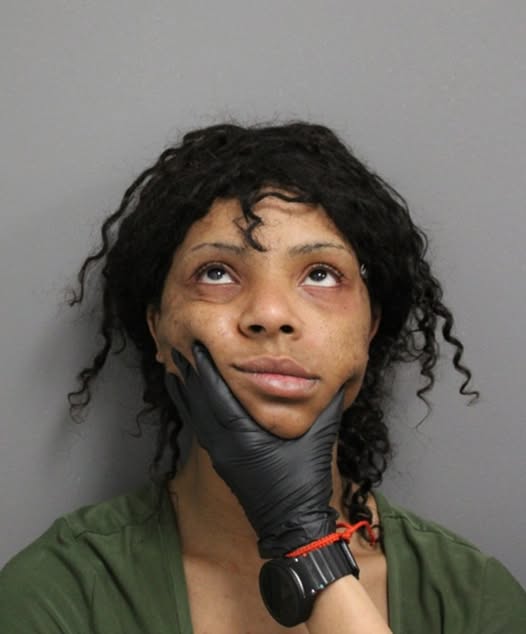
HOUSTON, Texas — In the modern era of digital law enforcement, a routine arrest can transform into a viral sensation in a matter of hours. A Houston-area constable’s office is currently finding itself at the center of a heated online debate after posting the booking photo of a 28-year-old woman, Fant Jomecia, who was taken into custody for an unusual trespassing incident.
Jomecia was arrested after allegedly attempting to access an apartment unit by jumping from a balcony. While deputies successfully apprehended her without incident and charged her with criminal trespass, it wasn’t the acrobatic nature of the alleged crime that caught the public’s attention—it was the decision by the constable’s office to broadcast her mugshot across their social media platforms.
The post quickly ignited a firestorm of reactions, sparking a broader conversation about the ethics of law enforcement agencies posting mugshots for low-level offenses, the dynamics of social media shaming, and the internet’s undeniable fascination with viral booking photos.
Here is a comprehensive breakdown of the incident, the arrest, and the swirling online controversy.
The Incident: An Unconventional Entry Attempt
The events leading up to the viral mugshot began as a disturbance call at a local Houston apartment complex.
While authorities have not released the specific address or the exact timeline of the incident to protect the privacy of the apartment’s residents, the fundamental details paint a picture of a highly unusual—and dangerous—attempt to gain entry into a residence.
According to the preliminary reports provided by the constable’s office, 28-year-old Fant Jomecia allegedly attempted to bypass traditional entryways to access a specific apartment unit. Instead of using a door, Jomecia reportedly scaled the exterior structure of the complex and attempted to jump from a balcony to access the targeted residence.
The Dangers of the Act: Attempting to jump from or between balconies is an incredibly high-risk maneuver. Beyond the obvious legal ramifications of trespassing, such actions frequently result in severe injury or fatal falls. The structural integrity of balcony railings, the distance between units, and unpredictable environmental factors make this type of physical escalation extremely dangerous. It remains unclear whether Jomecia was attempting to access her own locked apartment, a friend’s unit, or a residence where she was entirely unwelcome, but the sheer brazenness of the attempt prompted an immediate 911 call from concerned witnesses.
The Arrest: Taken Into Custody Without Incident
Following the 911 dispatch, deputies from the local Houston constable’s office arrived at the apartment complex to secure the scene and investigate the disturbance.
When law enforcement intercepts an individual attempting to bypass security or scale a building, the interactions can often become tense and unpredictable. However, in this instance, the situation was de-escalated swiftly.
-
The Apprehension: Deputies located Fant Jomecia at the scene. Recognizing the presence of law enforcement, Jomecia reportedly complied with the officers’ commands. Authorities confirmed that she was taken into custody “without incident,” meaning no force was required, and no physical altercation took place between the suspect and the arresting deputies.
-
The Charge: Criminal Trespass: Following her apprehension, Jomecia was officially charged with criminal trespass. In the state of Texas, criminal trespass occurs when a person enters or remains on or in the property of another without effective consent, and the person had notice that the entry was forbidden or received notice to depart but failed to do so.
-
The Penalty: Depending on the specific circumstances (such as whether the trespass occurred at a residential habitation versus a commercial property), criminal trespass in Texas is typically classified as a Class B or Class A misdemeanor, punishable by fines and up to a year in county jail.
Following her arrest, Jomecia was transported to a local detention facility, processed, and photographed for her official booking mugshot.
The Social Media Firestorm: Why the Constable is “Catching Heat”
In jurisdictions across Texas and the United States, it has become a standard public relations practice for local sheriffs, police departments, and constables to post daily arrest logs and mugshots on platforms like Facebook, X (formerly Twitter), and Instagram. The stated goal is usually community transparency and deterrence.
However, when the constable’s office posted Fant Jomecia’s mugshot alongside a brief description of her balcony-jumping arrest, the internet reacted with unexpected intensity. The comment sections were immediately flooded, and the post was shared thousands of times, resulting in the department “catching heat” from a highly vocal online audience.
The backlash and viral attention stem from several intersecting social dynamics:
1. The “Pretty Privilege” Phenomenon: As has happened numerous times in recent internet history, Jomecia’s physical appearance immediately became the primary focus of the comment section. Users frequently flock to the mugshots of conventionally attractive individuals, leaving comments that range from humorous offers to “pay her bail” to outright declarations of infatuation. This viral phenomenon distracts from the alleged crime and turns a serious legal matter into a widespread internet meme. The department caught heat for inadvertently turning the 28-year-old into a viral spectacle.
2. The Ethics of Public Shaming for Misdemeanors: A more serious wave of backlash came from privacy and criminal justice advocates. Many users criticized the constable’s office for utilizing their massive platform to publicly broadcast a mugshot for a relatively low-level, non-violent misdemeanor charge.
-
The Argument: Critics argue that posting mugshots for crimes like criminal trespass serves no true public safety purpose. Instead, it acts as a form of digital public shaming that can permanently damage a person’s reputation, employment prospects, and mental health long before they have ever seen the inside of a courtroom.
-
Presumption of Innocence: The core tenant of the American justice system is that an individual is innocent until proven guilty. When law enforcement agencies post mugshots on social media, the public often treats the post as a definitive conviction, bypassing the judicial process entirely.
3. The Absurdity of the Alleged Crime: The internet loves a bizarre narrative. The mental image of a 28-year-old woman executing parkour-style leaps between apartment balconies to gain entry struck many users as wildly absurd. The sheer audacity of the alleged act generated a flood of jokes and memes, further accelerating the viral nature of the post and forcing the constable’s office to heavily moderate the ensuing digital chaos.
The Evolving Debate Over Law Enforcement Social Media
The controversy surrounding Fant Jomecia’s mugshot is not an isolated incident. It highlights a growing national debate regarding how law enforcement agencies should utilize social media.
In recent years, several states (including California and New York) and individual police departments have voluntarily restricted or outright banned the practice of posting booking photos for non-violent crimes on social media. These policy shifts are driven by the recognition that the internet is permanent. Even if a charge like criminal trespass is eventually dropped, dismissed, or expunged from a person’s record, a viral mugshot can haunt them indefinitely, appearing in Google search results for decades.
For the Houston constable’s office, the intense reaction to Jomecia’s arrest post serves as a real-time stress test of their public relations policies. When a department’s comment section devolves into a mix of internet thirst, public mockery, and ethical debate, administrators are often forced to weigh the value of “transparency” against the very real collateral damage inflicted upon the individual in the photograph.
What Happens Next for Fant Jomecia?
As the internet continues to debate the ethics of her viral mugshot, Fant Jomecia must now navigate the very real consequences of the Texas legal system.
Following her booking for criminal trespass, she will be subjected to the standard judicial process:
-
Bond Hearing: A magistrate judge will review her charges and set a bond amount. Given that the charge is a non-violent misdemeanor and she was taken into custody without incident, it is highly likely she will be granted a standard, relatively low bond.
-
Court Appearances: She will be required to appear in a Harris County or local municipal courtroom to formally enter a plea of guilty or not guilty.
-
Potential Resolutions: First-time offenders or those facing misdemeanor trespass charges often have access to pre-trial diversion programs, community service options, or plea agreements that can eventually keep a permanent conviction off their record.
While the legal system will eventually resolve the question of her alleged balcony trespass, the digital footprint of her arrest may prove much harder to erase.
Leave a Reply